
Chain Link Fence Fabric Guide: Gauge, Mesh Size, Coatings & Selvage Explained
Chain Link Fence Fabric Guide: Gauge, Mesh Size, Coatings & Selvage Explained
If you're trying to choose the right chain link fence fabric, you're not alone. Many customers get confused by the term “fabric” and by the different gauges, mesh sizes, and coatings available. This guide breaks everything down so you can choose the right chain link fabric for your project with confidence.
Quick Recommendations (Most Customers Choose)
- Best for Residential: 11 gauge, 2" mesh, galvanized or black coated
- Best for Commercial: 9 gauge, 2" mesh, galvanized
- Best for Industrial Use: 6 or 9 gauge, 2" mesh, galvanized
- Best for Coastal Areas: Aluminized chain link fabric
- Best for Appearance: Black vinyl-coated chain link fabric
Pro Tip: For most permanent residential installations, we recommend at least 11 gauge chain link fabric for better durability and long-term performance.
What Is Chain Link Fabric?
Chain link fabric is the woven steel mesh portion of a chain link fence. It is called “fabric” because the wire is woven into a continuous diamond pattern by machine—not because it is made from cloth or privacy material. The fabric is what creates the barrier of the fence and is secured to posts and framework using fittings such as tension bands and tension bars.
Chain link fabric is typically made from galvanized steel, aluminized steel, or polymer-coated galvanized steel wire. The type of coating, along with the wire gauge and mesh size, determines how strong and long-lasting the fence will be.
Understanding Chain Link Gauge
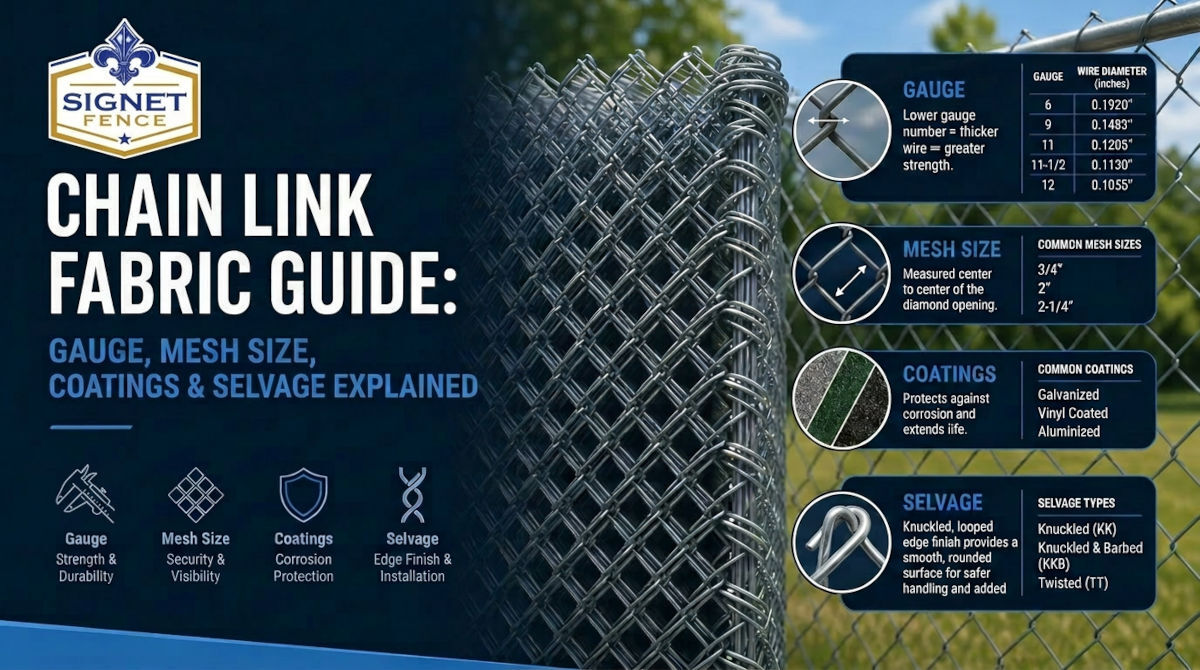
Gauge refers to the thickness of the wire used to make the chain link fabric. The lower the gauge number, the thicker and stronger the wire. For example, 9 gauge is heavier than 11 gauge, and 11 gauge is heavier than 11-1/2 or 12 gauge.
Heavier gauge chain link fabric provides better durability, resists bending and damage, and holds tension better over time. Lighter gauge fabric may cost less initially, but it is typically not as strong or long-lasting.
| Gauge | Strength | Typical Use |
| 9 | Very High | Commercial, industrial, schools, parks |
| 11 | High | Residential (recommended minimum) |
| 11.5 | Medium | Light residential / budget |
| 12 | Light | Temporary or low-demand use |
What Gauge Chain Link Fence Should I Use?
For most permanent residential chain link fence installations, we recommend at least 11 gauge. It provides a strong balance of durability, performance, and value. While 11-1/2 gauge and 12 gauge options are widely available, they are lighter and generally better suited for lower-demand or temporary applications.
- 6 gauge: Very heavy duty, best for industrial use
- 9 gauge: Best for commercial and high-use environments
- 11 gauge: Ideal for most residential fencing
- 11.5 / 12 gauge: Budget or temporary applications
Mesh Size Explained
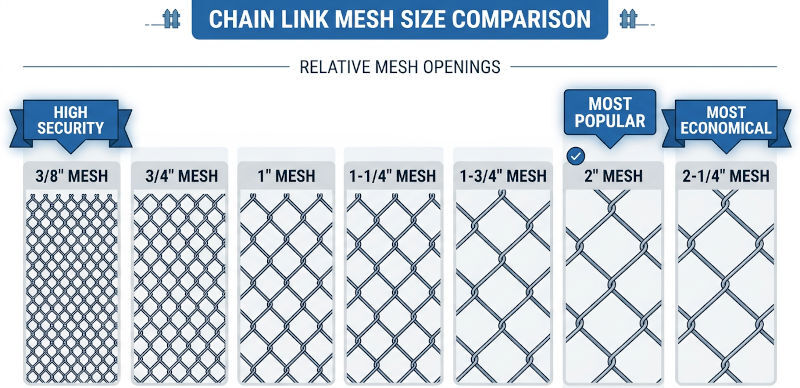
Mesh size refers to the size of the diamond-shaped opening in the chain link fabric. It is the distance between the diagonals, not between the links. The most common mesh size is 2", which provides a good balance of security, visibility, and cost.
2" Mesh
The standard for most residential and commercial chain link fences. It is difficult enough to climb while still remaining affordable and widely available.
Smaller Mesh Sizes
Mesh sizes such as 1-3/4" and 1-1/2" are commonly used for tennis courts, sports facilities, and specialty applications. Smaller mesh openings use more steel per roll, which increases both weight and cost.
Mini Mesh
Mini mesh products, as small as 1/4", are used in high-security or specialized containment applications. These are not typical for standard residential or commercial fencing.
What Mesh Size Is Best?
- 2" mesh: Best for most residential and commercial fencing
- 2-1/2" mesh: Best for temporary fencing
- Smaller mesh: Best for sports or security applications
Types of Chain Link Fabric
Galvanized Chain Link
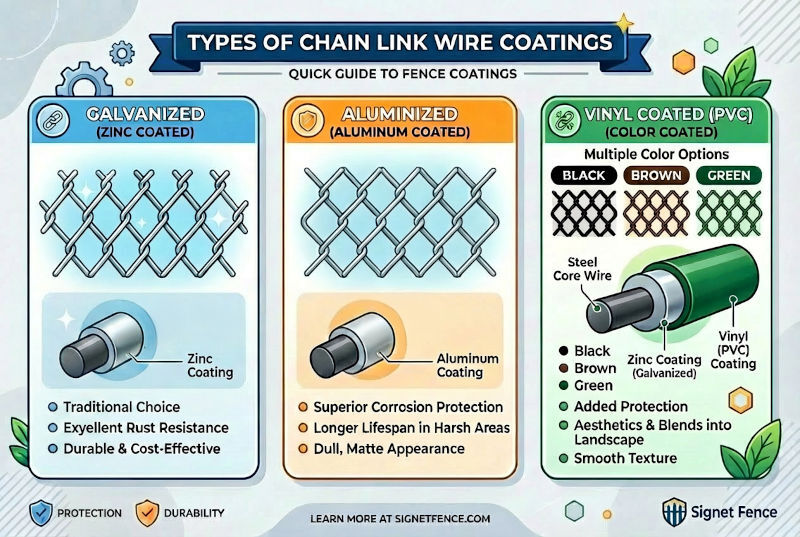
The most common and cost-effective option. Galvanized chain link uses a zinc coating to protect against rust. Higher-quality galvanized fabric typically has better coating and longer life.
Aluminized Chain Link
Uses an aluminum alloy coating and provides excellent corrosion resistance. This is often the best choice for coastal or high-moisture environments.
Vinyl-Coated (Black) Chain Link
Popular for residential applications because it blends into landscaping and offers a cleaner appearance. It also provides an additional protective layer over the steel core.
| Type | Best For | Main Advantage |
| Galvanized | General use | Affordable |
| Aluminized | Coastal / corrosive environments | Superior rust resistance |
| Black Coated | Residential / aesthetic applications | Better appearance |
What Is Selvage?
Selvage refers to how the ends of the wire are finished after the fabric is woven. This affects both safety and security.
- Knuckle (K&K): Rounded edges for safety (best for residential)
- Knuckle-Twist (K&T): One safe side, one secure side
- Twist (T&T): Sharp edges for security applications
How Long Does Chain Link Fabric Last?
In general, properly maintained, professional grade chain link fabric can last 20 years or more. The lifespan of chain link fabric depends on the gauge, coating type, and environment. Heavier, professional-grade fabric with better coatings will typically last significantly longer than lighter, lower-cost options. Coastal and humid environments may require upgraded materials such as aluminized fabric for longer service life.
Best Chain Link Fabric for Your Project
- Backyard Fence: 11 gauge, 2" mesh, K&K selvage
- Commercial Fence: 9 gauge, 2" mesh
- Coastal Area: Aluminized fabric
- Security Fence: Smaller mesh + heavier gauge
Chain Link Fabric Cost Factors
The price of chain link fabric is influenced by wire gauge, mesh size, and coating type. Heavier wire, smaller mesh openings, and upgraded coatings all increase material cost, but they also improve durability and performance.
Common Mistakes Buyers Make
- Confusing fabric with privacy screen material
- Choosing lighter gauge materials for permanent fencing
- Ignoring coating quality
- Selecting incorrect selvage for the application
- Overpaying for smaller mesh when not needed
Shop Chain Link Fence Fabric & Parts
Ready to build your fence? Shop high-quality chain link materials designed for long-term performance:
Need help choosing? Contact our team and we’ll help you select the right materials for your project.
Frequently Asked Questions
What is chain link fabric?
It is the woven steel mesh that forms the fence barrier.
What gauge chain link fence is best?
At least 11 gauge is recommended for permanent residential fencing.
What mesh size is standard?
2" mesh is the most common.
What is the best option for rust resistance?
Aluminized chain link offers the best corrosion resistance.