
Chain Link Fence Parts Guide: A Complete Overview
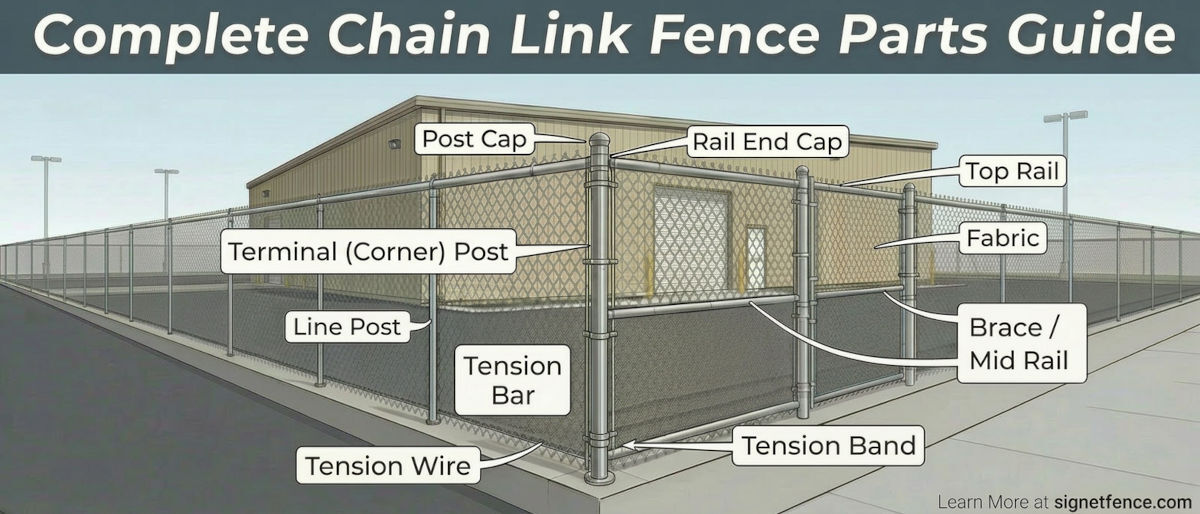
Chain Link Fence Parts Guide: Complete Overview of Chain Link Fence Components
If you are building a chain link fence, understanding the different chain link fence parts is essential. A complete chain link fence system includes posts, rails, fabric, fittings, gates, and hardware. Each component plays an important role in the strength, durability, function, and overall appearance of the fence.
This guide explains the main chain link fence parts, what each one does, and how they work together to form a complete fence system. Whether you are a homeowner installing a backyard fence or a contractor working on a commercial project, this guide will help you better understand the full chain link fence system.
Main Chain Link Fence Parts
A complete chain link fence is made up of four main categories of components:
- Chain link fabric
- Posts and framework
- Chain link gates
- Fittings and hardware
Understanding these four categories will help you plan your fence project and make sure you order all of the necessary materials. Below is an overview of what each does, as well as a link to an in-depth guide that dives deeper into the details of the different chain link fence components.
Chain Link Fence Fabric
Chain link fabric is the woven steel mesh that forms the barrier of the fence. It is stretched between terminal posts and attached to the framework using tension bars, tension bands, and tie wires.
Chain link fabric is available in different gauges, mesh sizes, coatings, and selvage types. Choosing the correct fabric depends on the intended use of the fence and whether the installation is residential, commercial, or industrial.
Read our full Chain Link Fabric Guide
Chain Link Fence Posts and Framework
The posts and framework are the structural support system of the fence. The framework includes terminal posts, line posts, top rail, bottom rail or tension wire, and the pipe fittings that connect everything together.
The strength of a chain link fence is largely determined by the size and thickness of the posts and rails used. Heavier posts and thicker pipe walls create a stronger, more durable fence.
Read our Chain Link Posts and Framework Guide
Chain Link Gates and Gate Hardware
Chain link gates are the points of entry and exit in a chain link fence enclosure. There are many different types of gates that can be used in a chain link fence, ranging from simple swing gates to automated cantilever gates. Chain link gate hardware includes the hinges, latches, rollers, wheels, and drop rods that allow the gate to open, close, and function properly.
Read our Chain Link Gate Guide (coming soon)
Chain Link Fence Fittings and Hardware
Chain link fence fittings are used to connect the fabric to the posts and rails and to connect the framework components together. Common fittings include tension bands, brace bands, rail ends, loop caps, and post caps.
Although fittings are some of the smaller parts of the fence, they are critical to proper installation, long-term durability, and overall fence performance.
Read our Chain Link Fittings Guide
Basic Chain Link Fence Parts List
| Part | Purpose |
| Terminal Posts | End, corner, and gate support posts |
| Line Posts | Support posts between terminal posts |
| Top Rail | Horizontal rail connecting posts |
| Bottom Rail / Tension Wire | Supports the bottom of the fence |
| Chain Link Fabric | The fence mesh barrier |
| Tension Bars | Attach fabric to terminal posts |
| Tension Bands | Hold tension bars to posts |
| Brace Bands | Attach rail ends and other fittings to terminal posts |
| Rail Ends | Connect top rail to terminal posts |
| Loop Caps | Connect top rail to line posts |
| Tie Wires | Attach fabric to rails and line posts |
| Post Caps | Cover the tops of posts |
How a Chain Link Fence Is Built (Overview)
A chain link fence is built by installing terminal posts first, then installing line posts between them. The top rail (if using) is installed by connecting it to the terminal posts and running it through the loop caps on the line posts; it serves to hold up the chain link fabric and prevent it from sagging.. The chain link fabric is then stretched between the terminal posts and attached to the framework using tension bars, bands, and tie wires. Finally, gates are installed with the appropriate hinges and latches.
Each part of the fence works together to create a strong, durable, and properly functioning fence system.
Tips for Choosing the Right Chain Link Fence Parts for Your Project
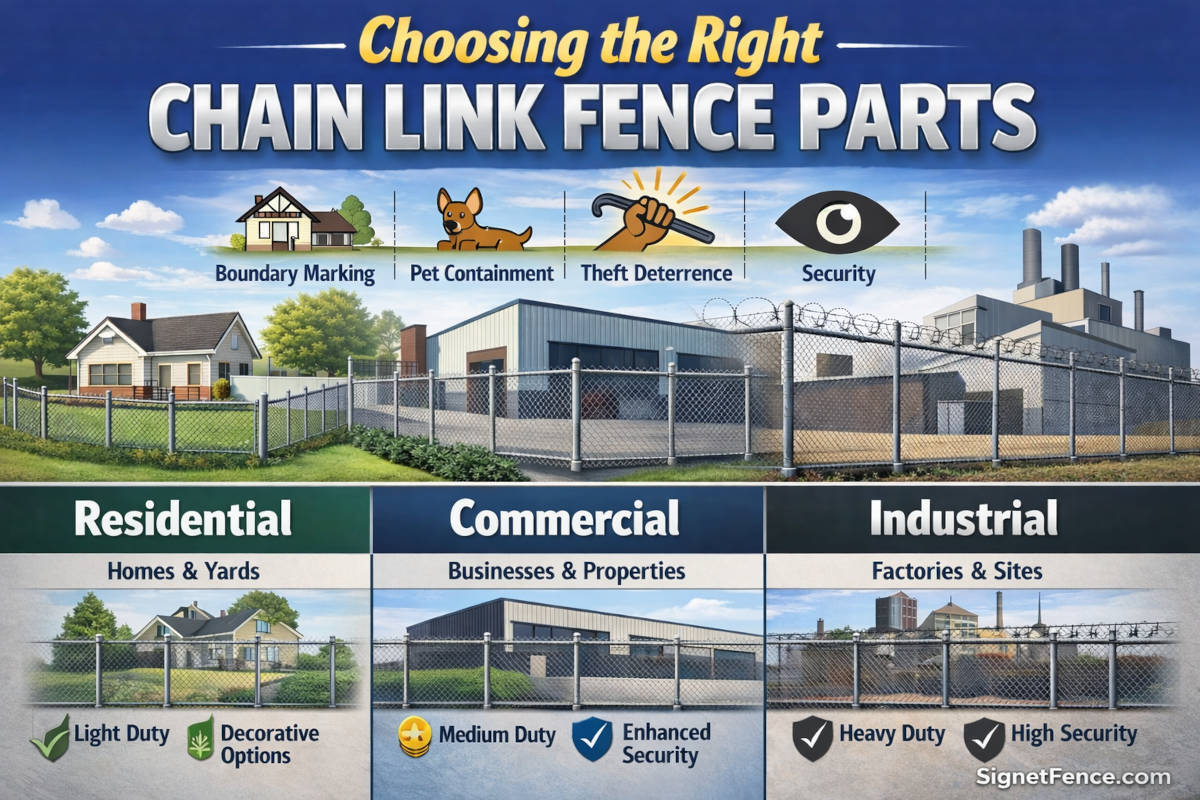
Selecting the right chain link fence parts depends on both the fence’s purpose—such as boundary marking, aesthetics, pet containment, or security—and the installation environment, whether residential, commercial, industrial, or high-security. Below are some quick guidelines that are explored in greater detail in our in-depth guides.
- Residential fences typically use lighter posts, framework, fabric, and hardware than other environments. This is because they are usually shorter and are more focused on boundary marking, pet containment, and basic security than on heavy-duty protection or high-security applications.
- Commercial fences are often taller (6' +) and commonly use heavier framework such as SF20 or SF40 pipe.
- Industrial fences often use Schedule 40 posts and heavier fabric. They typically enclose large perimeters and serve a dual purpose of boundary marking and deterrence against theft and vandalism. They also often include additional bracing and may feature barbed wire at the top of the fence. In many cases, they use large drive-through rolling or cantilever gates that require large-diameter, heavy-wall gate posts.
- Line posts are almost always a smaller diameter than terminal posts because terminal posts carry the tension of the stretched fabric and tension wire. Gate posts are usually the same size as, or larger than, end and corner posts because they must support the weight and movement of the gate.
- Privacy screening or slats often require an upgrade to heavier-gauge framework and larger pipe diameters because of the additional wind load placed on the fence.
- Post spacing affects both the strength and the cost of the fence.
Complete Chain Link Fence System Guides
Use the guides below to learn more about each part of a chain link fence system:



Frequently Asked Questions About Chain Link Fence Parts
What parts are needed for a chain link fence?
A chain link fence typically includes posts, top rail, chain link fabric, tension bars, bands, rail ends, loop caps, tie wires, and gates.
Why is chain link called fabric if it is made out of metal?
The diamond pattern of chain link is woven by a machine in a way that is similar to fabric, which is why it is called chain link fabric. It is not the same as privacy screen, which is a knitted fabric typically made from HDPE.
What are terminal posts and line posts?
Terminal posts are end, corner, and gate posts that hold the tension of the fence system. Line posts are the smaller posts installed between terminal posts to support the fence line.
What holds chain link fabric to the posts?
Tension bars and tension bands attach the fabric to terminal posts, while tie wires attach the fabric to the rails and line posts.
What is the top rail on a chain link fence?
The top rail is the horizontal pipe that runs along the top of the fence and connects the line posts together. It helps keep the fabric from sagging between the posts. The fabric is attached to the top rail with fence ties.
Is it common to have more than one rail on a fence?
The top rail is the most common horizontal rail on a chain link fence, but some fences also use a bottom rail to help frame the fabric and make it more difficult to push or dig under the fence. Taller fences (8' +) often include a mid-brace rail as well.